Electrons in Lithography and Imaging for Science and Application
11.-14. AUGUST 2026
REYKJAVIK, ICELAND
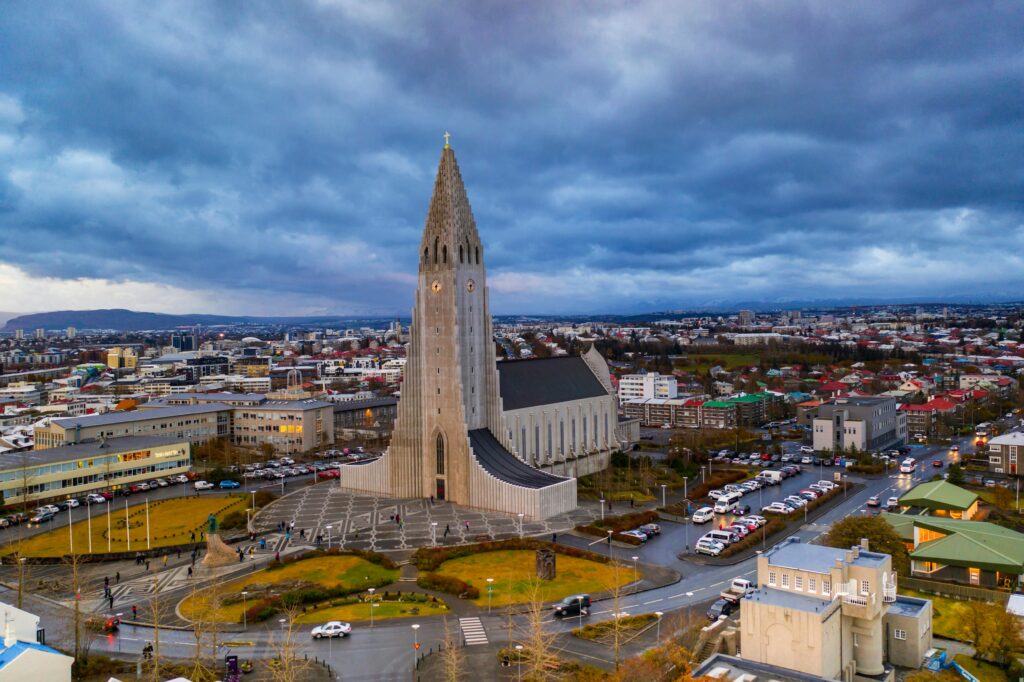
Welcome to ELISA 2026
ELISA 2026 brings together the international community advancing electron-driven science and technology – from fundamental interaction studies to next-generation lithography, imaging, and 3D nanomanufacturing.
In Reykjavík, 11–14 August 2026, researchers and innovators will explore how physics, materials, chemistry and instrumentation converge to shape the future of electron-based science in nano-technology.
Important Dates
Conference
Call for papers opens
Deadline for abstract submission
Acceptance notification
Registration opens
Final program online
Early bird registration ends
Posters only accepted until
11-14 August 2026
–
15 May 2026
1 July 2026
15 March 2026
15 July 2026
1 July 2026
15 July 2026
ELISA 2026 explores the full spectrum of electron–matter interaction, from the mechanisms that govern secondary electron production, energy transfer, chemistry, and material response, to the technologies that harness these effects for imaging, patterning, and nanofabrication.
The meeting connects fundamental studies on electron generation through high energy photons, as is the case in EUV- and X-ray lithography, as well as through high-energy electron and ion beams as is the case in BEACON, with electron transport, electron scattering and electron induced chemistry. It further connects these fundamentals of physics and chemistry with advances in beam- and light-based lithography, nanofabrication, spectroscopy, and high-resolution microscopy. Hence, covering electron-matter interaction induced by ionizing radiation equally in EUVL and beam lithography.
Beyond the fundamental understanding, ELISA highlights how electron and ion beams enable direct-write, site-specific manufacturing of functional structures – from the lowest nanoscale to fully functional 3D architectures and how photons enable the patterning and imaging in thin photosensitive films through low energy electron generation and their interaction with matter.
By linking expertise in modelling, metrology, experiments, and instrumentation, the event combines the know-how needed to shape the next generation of lithography, imaging, and beam-induced nanomanufacturing across science and industry.
Joint Forces
Aiming to strengthen the platform for foundation science on electron driven processes in patterning and imaging on the nanoscale, and its translation to applications, imec took an initiative in pulling together researcher and stakeholders in this field at a merged conference LE2AP+LEELIS 2024.
The LE2AP merged the communities of researchers from the MCS ITNs ELENA (low energy electron driven chemistry for the advantage of emerging nano-fabrication methods) and SIMDALEE2 (Sources, Interaction with Matter, Detection and Analysis of Low Energy Electrons), both focused on the physics and chemistry of electron driven processes in nanoscopic fabrication and imaging. Strengthening this imitative the long standing conference series LEELIS (Low-energy electrons: lithography, imaging and soft matter) joined – a conference series built on a strong tradition in understanding how electrons interact with matter, from their generation in photon‑, electron-, ion-, or atom-beam environments to their transport, absorption, and scattering in molecular systems, thin films, and photoresists and in imaging.
In parallel, the BEACON community (Beam Induced Nano-Manufacturing, formerly FEBIP) has pushed the frontiers from direct-write nanomanufacturing and localized modification towards functional 3D nano-printing through focused electron and ion beams, offering a collaborative platform with the long standing FEBIP conference series.
Now ELISA 2026 takes this a step further, uniting the long-standing and complementary LEELIS and BEACON communities, that have evolved around different yet deeply connected perspectives on electron-based science and technology.
With ELISA we seek to establish a lasting, bi-annual forum for the translation of the fundamental science of electron–matter interactions into practical fabrication strategies, enabling unique applications in materials science, micro-/nanoelectronics, and sensing.
By joining forces, ELISA 2026 bridges understanding and application over physics and chemistry, modelling, metrology and instrumentation. This fusion creates a broader and more integrated platform – one that connects fundamental insight with technological innovation, encourages collaboration across disciplines, and sets the stage towards new breakthroughs in lithography, imaging, and nanofabrication.